Uncovering AI’s Potential in Predicting Market Trends
24 March 2026
In today’s fast-paced world, markets are constantly evolving. Businesses and investors are always looking for ways to stay ahead of the curve. Enter artificial intelligence (AI)—a game-changer in predicting market trends. But how exactly does AI do it? And how can businesses and investors use it to their advantage? Let’s dive in and uncover AI’s true potential in forecasting market movements.
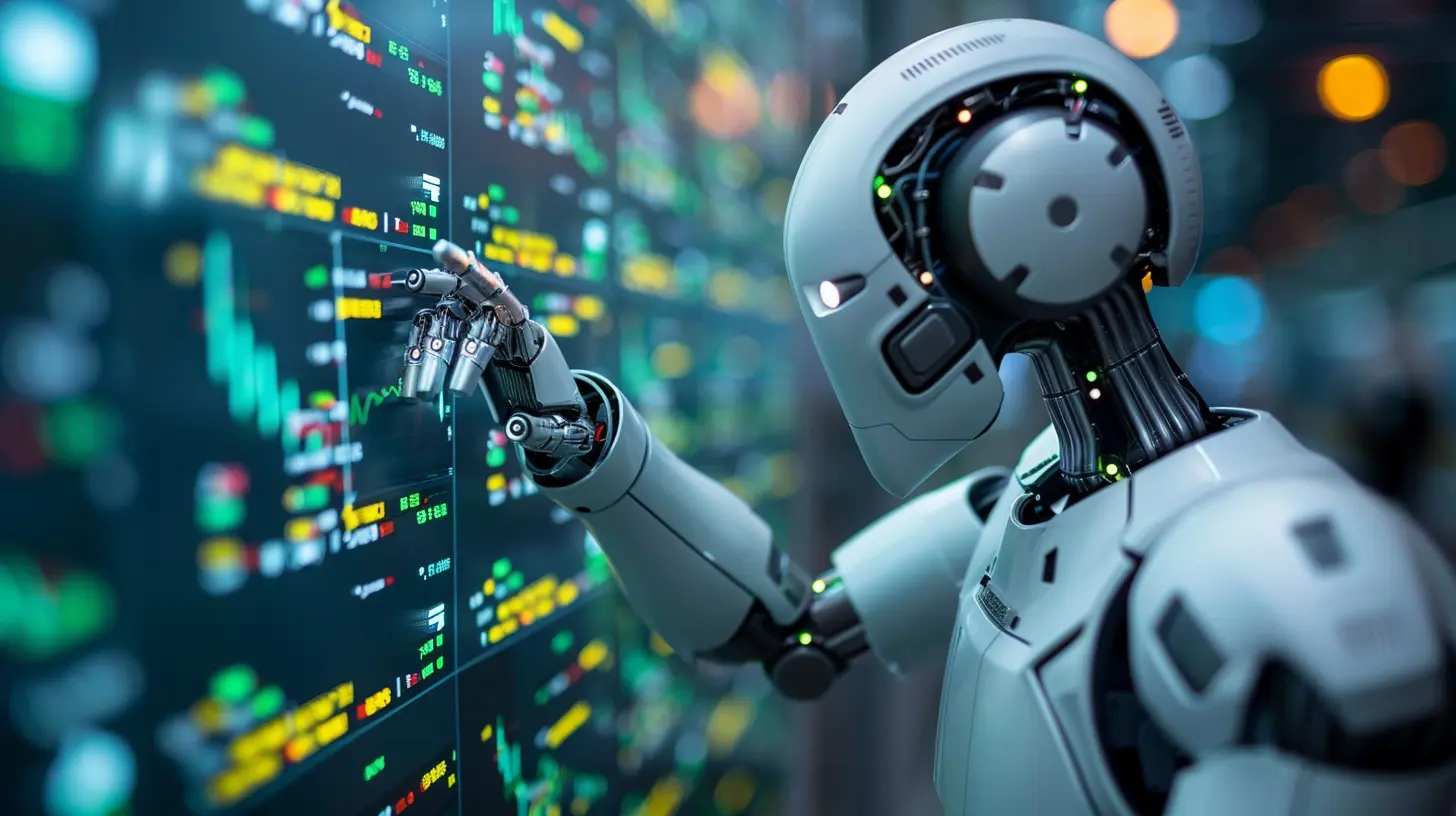
Understanding AI’s Role in Market Prediction
AI isn’t just about robots and automation. It’s about using machine learning, data analytics, and predictive modeling to make sense of enormous amounts of information. In the world of market trends, AI sifts through historical data, real-time news, and even social media chatter to predict what might happen next.Think of AI as a fortune teller, but instead of relying on a crystal ball, it uses complex algorithms and data science. By identifying patterns and correlations, AI can forecast shifts in economic trends, consumer behavior, and stock market fluctuations more accurately than traditional methods.
How Does AI Predict Market Trends?
AI relies on several key techniques to analyze and predict market movements:1. Big Data Analytics
AI processes massive datasets, scanning for patterns that might otherwise go unnoticed. It looks at financial reports, market signals, and even global economic news to provide meaningful insights.
2. Machine Learning Algorithms
With machine learning (ML), AI continuously improves its predictions by learning from past data. The more data it processes, the better it gets at identifying trends and anomalies.
3. Sentiment Analysis
AI scans social media platforms, news articles, and financial reports to gauge public sentiment. If everyone’s talking positively about a certain stock, AI might predict a bullish trend.
4. Neural Networks
Inspired by the human brain, neural networks allow AI to process complex, nonlinear data and make accurate predictions based on past market behaviors.
5. Natural Language Processing (NLP)
AI can read and interpret text-based information from earnings reports, news headlines, and company filings, helping it detect potential market shifts.
AI vs. Traditional Market Analysis
For decades, investors and businesses have relied on traditional market analysis techniques like technical and fundamental analysis. So, how does AI compare to these conventional methods?| Factor | Traditional Analysis | AI-Based Analysis |
|---------------------|--------------------|-----------------|
| Speed | Time-consuming | Lightning-fast |
| Accuracy | Prone to biases | Data-driven and precise |
| Data Processing | Limited scope | Can analyze terabytes of data in seconds |
| Adaptability | Static models | Continuously learning and evolving |
| Human Bias | Influenced by emotions | Emotion-free decision-making |
While traditional methods still hold value, AI provides a significant advantage by processing large datasets autonomously and making fast, data-driven decisions without emotional influence.

How Businesses Can Leverage AI for Market Prediction
Companies across various industries are starting to integrate AI-powered insights into their decision-making processes. Here's how:1. Stock Market Predictions
AI-driven trading algorithms analyze past stock market movements, economic indicators, and news sentiments to predict future price fluctuations. High-frequency trading firms rely on AI to execute rapid trades with precision.2. E-Commerce and Consumer Behavior Analysis
Online retailers use AI to forecast buying patterns, optimize inventory, and personalize customer experiences. For example, Amazon leverages AI to predict product demand and adjust pricing dynamically.3. Financial Planning and Investment Strategies
AI helps banks and financial institutions analyze risk, forecast loan defaults, and advise clients on investment strategies based on predictive analytics. Robo-advisors like Wealthfront and Betterment use AI to optimize portfolios.4. Real Estate Market Forecasting
AI analyzes housing trends, mortgage rates, and economic indicators to predict fluctuations in property values, assisting realtors, investors, and home buyers.5. Supply Chain and Logistics Optimization
AI predicts demand spikes, identifies supply chain disruptions, and automates logistics planning to help businesses stay efficient and cost-effective.
Challenges and Limitations of AI in Market Forecasting
While AI has tremendous potential, it’s not without its challenges:1. Data Quality and Availability
AI is only as good as the data it’s fed. If the data is incomplete or biased, AI’s predictions can be misleading.2. Market Volatility and Unpredictability
Market trends can be influenced by unforeseen events like economic crises, political instability, or global pandemics—factors that AI can struggle to account for.3. Over-Reliance on AI
Despite its capabilities, AI shouldn’t replace human judgment entirely. Market predictions should always complement traditional investment strategies and expert insights.4. Regulatory and Ethical Concerns
AI-driven trading and market predictions raise concerns about market manipulation, fairness, and transparency. Regulators are still working on policies to address these issues.The Future of AI in Market Trend Prediction
AI is still evolving, and its capabilities will only improve with time. In the near future, advancements in quantum computing and deep learning could make AI’s predictions even more accurate.Moreover, AI-driven systems will likely become more accessible to small and medium-sized businesses, leveling the playing field for those who previously didn’t have access to high-level predictive analytics.
Final Thoughts
AI is revolutionizing the way we predict market trends. Whether it’s stock market forecasting, consumer behavior analysis, or economic trend prediction, AI-powered models are proving to be invaluable tools for businesses and investors.However, it’s essential to strike a balance. AI alone isn't a magic bullet—it should be used in combination with traditional methods and human expertise. That way, businesses can make smarter, data-driven decisions without ignoring the nuances of market dynamics.
So, what’s the takeaway? If you’re not using AI to predict market trends yet, you might be falling behind. Now is the time to embrace this technology and leverage its power for smarter decision-making.
all images in this post were generated using AI tools
Category:
Artificial IntelligenceAuthor:

Amara Acevedo
Discussion
rate this article
2 comments
Carina McAdams
Market trends, meet your match! AI isn’t just a buzzword; it’s your new crystal ball. If you're still ignoring its predictive power, you're basically driving blindfolded in the fast lane. Time to buckle up and embrace the future, darling!
April 20, 2026 at 10:38 AM
Amara Acevedo
Absolutely! Embracing AI is essential for navigating market dynamics effectively. It’s time to leverage its predictive capabilities for smarter decision-making.
Uzi Peterson
Great insights! AI's ability to predict market trends is truly fascinating and could reshape our approach to decision-making.
March 28, 2026 at 5:38 AM
Amara Acevedo
Thank you! I agree, AI's predictive power really can transform how we make decisions in the market. Exciting times ahead!