How to Optimize Your Website Images for Better SEO
17 December 2025
Let’s face it—images make your website prettier, more engaging, and easier on the eyes. But here’s the thing: without proper optimization, those beautiful pictures could be silently killing your site’s SEO and slowing down your page speed.
Yep, you read that right.
Images are often the biggest files on your page, and if they’re not optimized correctly, they can affect everything from loading speed to bounce rates to, worst of all, your Google rankings.
But don't worry—I’ve got you covered.
This guide is your go-to playbook on how to optimize your website images for better SEO. We’ll walk through the nitty-gritty, from file names to alt text, lazy loading to sitemaps—and all the stuff in between—so by the end, you’ll be cranking out SEO-friendly images like a pro.
Let’s get into it.
Why Bother with Image Optimization?
Before we jump into the juicy tips, let’s answer a key question: why should you even care about optimizing your images?Well, here’s the deal:
- Page speed matters – Fast-loading sites rank better. Period.
- User experience matters – No one likes a sluggish website.
- Google can’t “see” images – You have to tell search engines what your images are about.
- Better image SEO = better visibility in image search – More visibility = more traffic.
Still think it’s just about “making things look pretty”? Think again.
Step 1: Choose the Right Image Format
This one gets overlooked a lot. Not all file types are created equal, folks.Here’s a simple breakdown:
- JPEG (JPG) – Great for photos or images with millions of colors. Good balance of quality and size.
- PNG – Perfect for images with transparency, logos, or illustrations. Higher quality, but bigger file sizes.
- WebP – The new kid on the block. Smaller than JPEG and PNG but just as sharp. Supported by most modern browsers.
- SVG – Best for vector graphics like icons and logos. Super lightweight and scalable without losing quality.
👉 TL;DR: Use JPEG for photos, PNG for transparency, SVG for simple graphics, and WebP when you want best-of-both-worlds performance.
Step 2: Resize Images Properly
Uploading a 3000x2000 pixel image when it’s just gonna show up as a 300x200 thumbnail? Yeah, that’s a rookie mistake.Before uploading any image:
- Check the maximum dimensions your website displays.
- Resize it using a tool like Photoshop, GIMP, or even online editors like TinyPNG or Squoosh.
- Aim for the exact size needed. Not bigger.
Bigger images = more bytes = longer load times = visitors bouncing like ping-pong balls.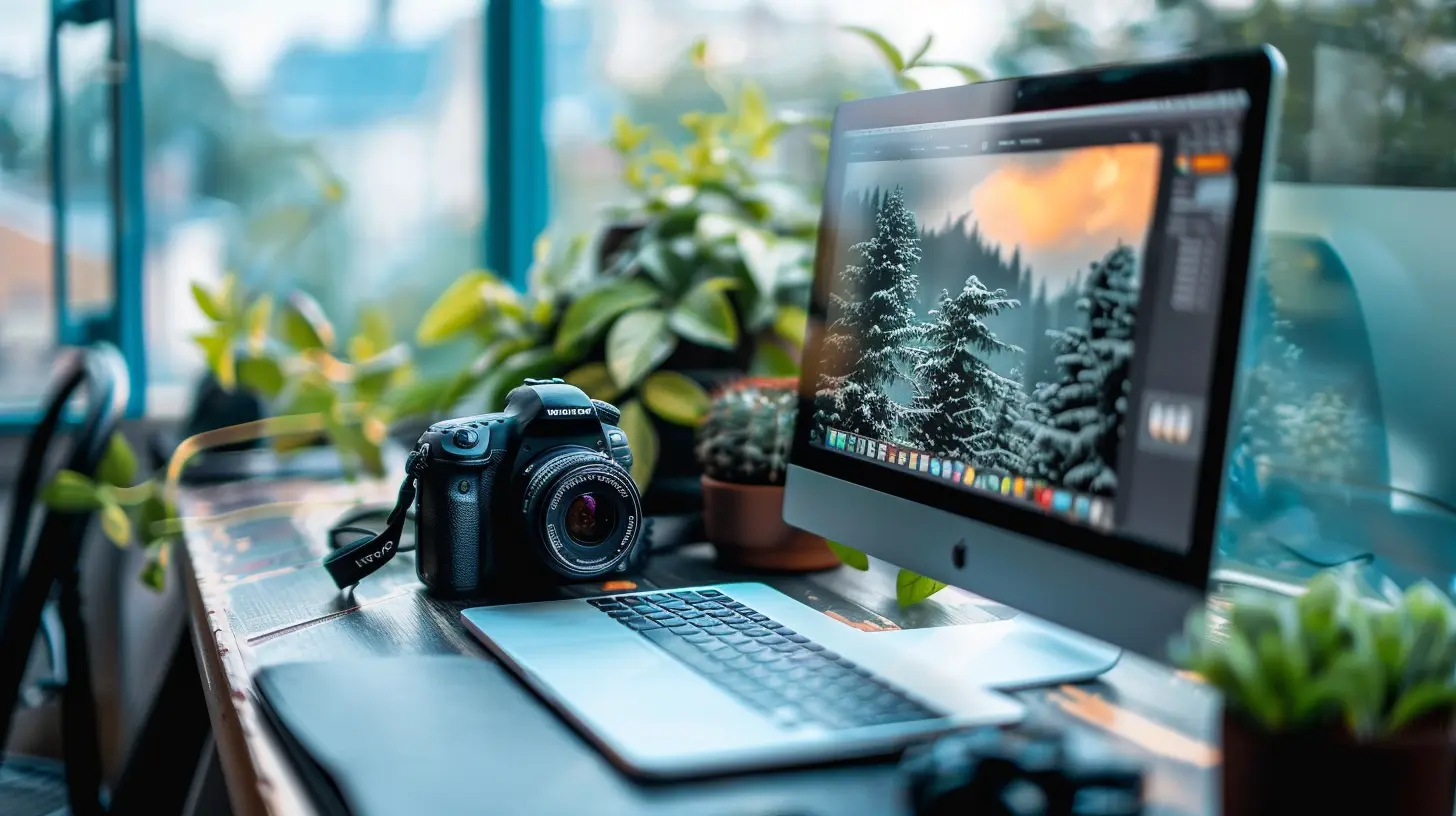
Step 3: Compress Images Without Killing Quality
Compression is your secret weapon.You can dramatically reduce the file size of your images without turning them into pixelated messes.
Two types of compression:
- Lossy: Reduces file size by stripping some data (great for web, barely noticeable quality drop).- Lossless: Keeps all original data (larger files, but pristine quality).
Use tools like:
- TinyPNG
- ImageOptim
- ShortPixel
- Squoosh
Just drag, drop, download, and boom—speedier images without breaking a sweat.
Step 4: Name Your Files Like a Human (and a Robot)
Okay, let’s be honest—naming your file `IMG_7692.jpg` helps absolutely no one.Instead, think like a keyword-focused content creator.
If your image is a photo of a vegan chocolate cake, name it something like:
`vegan-chocolate-cake.jpg`
Why?
Because Google reads file names. So do screen readers. This is your chance to tell search engines what the image is.
Pro tip: use hyphens between words (not underscores). Google treats hyphens as spaces.
Step 5: Write Effective Alt Text
Alt text = alternative text = the MVP of image SEO.Here’s what it does:
- Helps visually impaired users understand what’s in an image.
- Shows up if the image doesn’t load.
- Gives search engines more context for ranking.
So what makes good alt text?
Let’s go back to that vegan cake.
Bad alt text:
`photo`
(Nope.)
Better:
`vegan chocolate cake on a wooden table with strawberries`
(Yep. Descriptive, relevant, and keyword-rich.)
Quick rules:
- Be concise.
- Be descriptive.
- Don’t stuff keywords.
- Only add alt text to meaningful images—not decorative ones.
Step 6: Use Structured Data (When It Makes Sense)
Structured data helps Google understand your content better. If you’re using product images, recipe images, or video thumbnails—this is gold.You can use Schema.org markup to label your images properly.
For example: If you’re selling sneakers, you can include product schema so Google knows your image relates to a specific product, price, availability, etc.
More context = richer search results.
Step 7: Implement Lazy Loading
This is where things get cool.Lazy loading means your images only load when they’re about to come into the user’s view. Not before.
Result? Faster initial page loads like lightning, especially on mobile.
Most modern web platforms support lazy loading. If you’re using WordPress, it’s basically a click away.
Just add this to your `` tag:
html

Boom—blurred backgrounds, be gone.
Step 8: Create an Image Sitemap
Got tons of images that Google needs to see?Help it out a little.
Creating an image sitemap (or adding image info to your existing sitemap) makes sure Google crawls and indexes all your visual content.
If you’re not techy, plugins like Yoast or Rank Math can do this for you on WordPress.
Otherwise, manually add entries like this:
xml

  http://example.com/images/photo.jpg
  Caption of the image
  Title of the image
More visibility, more traffic. Simple math.
Step 9: Use Responsive Images
Screens come in all shapes and sizes now—from desktop monitors to tiny smartphones. You can’t serve the same image to everyone.Enter: responsive images.
Use the `srcset` attribute in your image tag to serve different sizes based on screen width.
html
![]() src="small.jpg"
src="small.jpg"
srcset="medium.jpg 600w, large.jpg 1200w"
sizes="(max-width: 600px) 100vw, 50vw"
alt="Responsive example">
That way, no one’s downloading a massive image on a mobile connection. Thank me later.
Step 10: Avoid Text in Images
This one's more of a design + SEO tip.Search engines can’t read text in images (unless you use OCR, which is a whole other mess). So, if you’re embedding crucial info in an image—like a promotion or headline—Google won’t see it.
Do this instead:
- Put text in HTML/CSS.
- Use images for illustration or enhancement, not communication.
Better for SEO. Better for accessibility. Better for you.
Step 11: Use a CDN (Content Delivery Network)
If your site has lots of heavy media (images, videos, etc.)—especially if you’ve got a global audience—using a CDN is a game changer.A CDN is like a network of servers around the world that store copies of your content. When someone visits your site, they load images from the server closest to them.
Result? Faster load times everywhere.
Some popular CDNs:
- Cloudflare
- Amazon CloudFront
- KeyCDN
- Bunny.net
It’s like teleporting your files closer to your users.
Bonus Tips You Probably Didn’t Know
Let’s wrap this up with a few lesser-known gems:- Use image captions – They’re read by users and search engines. Great place to drop keywords.
- Decorative images? Use role="presentation" or empty alt text – Keeps screen readers from announcing them.
- Enable browser caching – So returning visitors don’t need to reload images each time.
- Host images on your domain (where possible) – So you get the SEO juice, not some third-party site.
Final Thoughts
Image SEO isn’t just a box to tick. It’s a major player in your website’s visibility, speed, accessibility, and user engagement.When you optimize your images, you’re not just helping search engines—you’re creating a faster, smoother experience for your visitors. That means higher rankings, longer dwell times, fewer bounces, and ultimately—yep—more conversions.
So do yourself (and your users) a favor and go give your images some SEO love.
Because a picture might be worth a thousand words, but an optimized picture? That’s worth a thousand hits.
all images in this post were generated using AI tools
Category:
SeoAuthor:

Amara Acevedo
Discussion
rate this article
2 comments
Rook Mathews
Great article! Optimizing website images is such a crucial step for boosting SEO. Simple tweaks can make a big difference in loading times and search rankings. Thanks for sharing these tips!
January 22, 2026 at 6:03 AM
Amara Acevedo
Thank you for your kind words! I'm glad you found the tips helpful for improving SEO. Happy optimizing!
Karson Riggs
Stop neglecting images! They're crucial for SEO—optimize now or fall behind your competition.
December 24, 2025 at 3:54 AM
Amara Acevedo
Thank you for the reminder! Images are indeed vital for SEO, and I'll be sure to emphasize their optimization in future content.